Introduction
Deciding to build a custom vacation home on your lot in Mattapoisett is both exciting and complex. Whether you own a waterfront parcel or a mid-block lot near the harbor, the choices you make early on—timeline expectations, coastal materials, and systems sized for year-round use—will determine comfort, maintenance needs, insurance costs, and long-term value.
For second-home owners and investors considering seasonal rental income, conversion to year-round living, or eventual retirement use, understanding local permits, coastal construction strategies, and realistic schedules will help you make an informed decision. Mattapoisett’s coastal location adds benefits—beautiful views and strong rental demand—but also adds constraints like salt-air exposure, storm risk, and specific town permitting steps.
RJ Built works with homeowners across the Southcoast to manage projects from concept through completion. If you already own land and are exploring a build, our build on your lot program is designed to guide owners through planning, permitting, and construction so the finished home performs well seasonally and over the long term.
This article walks through a realistic timeline for a Mattapoisett project, coastal materials and exterior systems that hold up to salt and wind, HVAC and septic upgrades for year‑round conversion, insurance and financial considerations, and design choices that support vacation‑rental use and low maintenance. Use this as a decision‑support guide to frame conversations with architects, engineers, and your custom builder in Cape Cod.
Typical Timeline for Building a Custom Vacation Home in Mattapoisett
Timelines vary with scope, site complexity, and permitting. For a new custom home on your lot expect a planning and construction window commonly between 9 and 15 months for a straightforward project; more complex waterfront lots, tight setbacks, or design revisions can extend that to 18 months or more.
A practical timeline breakdown helps you set expectations with lenders, tenants, or family members:
- Design and budgeting (2–4 months): Concept, schematic design, and preliminary budgets. This is when you finalize size, layout, and major material decisions with your architect and builder.
- Permitting and approvals (1–3 months): Local zoning, building permits, and any coastal/shoreline approvals. Waterfront lots often need additional conservation or state-level reviews.
- Site work and foundation (1–2 months): Clearing, grading, excavation, and foundation—pile foundations or elevated systems may be required closest to the water.
- Framing and shell (1–2 months): Structure, roof, windows, and weatherproofing. Fast progress here protects interior trades from weather delays.
- Systems and insulation (1–2 months): HVAC, plumbing, electrical, and septic or sewer tie‑in, plus insulation and air barrier work for energy performance.
- Finishes and landscaping (2–4 months): Cabinets, floors, trim, exterior siding, decks, driveway, and final grading. Inspections and certificate of occupancy follow completion.
To reduce surprises, build a contingency into your schedule and budget. RJ Built’s hands‑on project management helps keep projects on track and communicates changes as they occur. For more detail on building a new home, review our custom home construction resources.
Site, Permitting, and Local Considerations in Mattapoisett
Mattapoisett has specific local requirements and coastal site realities to address before framing begins. Start with a site evaluation to check setbacks, soil conditions, FEMA flood maps, and access for construction equipment. A thorough survey and early soil testing save time later.
Important local steps include:
- Zoning and setbacks: Confirm how your lot’s zoning allows house size, height, and distance from the water. Board of Health and conservation commissions may impose additional conditions.
- Flood elevation and foundation type: Determine base flood elevation (BFE) and whether you need an elevated foundation or pilings—this changes foundation cost and timeline.
- Septic vs. sewer: Mattapoisett lots may require an engineered septic system sized for year‑round occupancy. Coordinate early with a septic designer and the Board of Health.
- Neighbor and conservation concerns: Early outreach reduces objections and expedites approvals where possible. Coastal projects often require wetland or shoreline buffers that affect placement.
Working with a local Southcoast home builder who knows Mattapoisett permits and conservation processes will streamline approvals and avoid common delays.
Coastal Materials and Exterior Systems Built for Salt Air
Salt air and wind-driven rain are the top durability challenges on the Southcoast. Choosing the right exterior materials and attachment methods reduces maintenance, extends life cycles, and protects interiors.
Common material choices for Mattapoisett waterfront and coastal homes include:
- Fiber cement siding or cedar shingles: Fiber cement resists rot and requires less maintenance than wood; cedar shingles offer classic Cape Cod aesthetics but need preservative treatment and regular inspection.
- PVC or composite trim: These materials resist moisture and rot around windows, eaves, and decks where salt splash is common.
- Stainless‑steel fasteners and corrosion‑resistant hardware: Using the proper fasteners prevents rust stains and structural issues that begin below the surface.
- Architectural metal or standing‑seam roofing: Metal roofing sheds wind and resists salt corrosion when properly detailed; architectural shingles designed for coastal exposure are another durable option.
- High‑performance windows and doors: Look for coastal ratings, impact options if required, and quality flashing to prevent water intrusion.
- Composite or PVC decking: Low-maintenance decks with hidden fasteners perform better next to salt water and carry lower life‑cycle costs than pressure‑treated wood.
Exterior choices also tie into energy performance. A continuous air barrier, proper flashing details, and ventilated roof assemblies keep moisture out and reduce long-term maintenance. For exterior projects like decks and siding, our custom deck construction and siding expertise support coastal performance goals.
HVAC, Insulation, and Septic Upgrades for Year‑Round Living
If your plan today is a seasonal getaway but you want the option to convert later, design mechanicals and systems with year-round comfort in mind. Upfront investments are almost always less expensive than retrofits.
Key systems to consider for a seasonal-to-year-round conversion:
- Right‑sized HVAC: Heat pump systems (cold-climate models) can provide efficient heating and cooling while minimizing ductwork. Consider a backup heating source if extreme cold is a concern.
- Insulation and air sealing: Upgrade wall and roof insulation to current code or better, and focus on continuous air barriers to prevent drafts and moisture issues in winter.
- Energy recovery ventilators (ERV/HRV): For airtight homes, ERV/HRV systems maintain fresh air and control humidity—critical in coastal climates.
- Septic capacity and design: Seasonal occupancy requires a different septic sizing than year‑round use. If year‑round living is a goal, plan an engineered septic system from the start to avoid costly replacements.
- Electrical service and generator options: Consider larger service capacity and a standby generator or transfer switch if you expect winter use and want resilience during storms.
Planning mechanicals during design preserves interior space, reduces surprises, and supports energy-efficiency goals that lower operating costs year-round. RJ Built coordinates with mechanical engineers and local trades to implement systems appropriate for Cape Cod conditions.
Insurance, Flood Zones, and Financial Planning
Insurance and financing for coastal properties require careful review. Lenders and insurers consider elevation, flood zone designation, and mitigation measures when pricing coverage.
Practical steps to protect your investment:
- Understand your flood zone: FEMA maps drive flood insurance requirements and premiums. If your lot sits in a high-risk zone, elevation, flood vents, or engineered fills can affect insurability and cost.
- Document wind and storm mitigation features: Impact‑rated windows, reinforced roof attachments, and hurricane straps can reduce premiums in some cases.
- Budget for insurance and maintenance: Coastal homes often carry higher premiums and maintenance costs—plan these into your operating expenses if you intend to rent seasonally.
- Explore tax and financing options: Construction loans and long‑term mortgages for new home construction have different timelines and draw schedules. Work with an experienced lender and builder to align cash flow.
Because insurance costs change based on mitigations and occupancy, discuss options early with your insurance agent and builder to prioritize measures that reduce long‑term risk and premium exposure. When you’re ready to discuss project timing and budget, contact RJ Built to schedule a consultation.
Vacation‑Rental Potential and Low‑Maintenance Design Choices
Many Mattapoisett second-home owners evaluate rental income to offset ownership costs. A well-built, low‑maintenance property with coastal appeal rents well in summer months and can command premium nightly rates near the water.
Design tips to maximize rental potential while minimizing owner workload:
- Durable, easy‑clean finishes: Choose quartz counters, porcelain tile, and resilient flooring that stand up to heavy use and salt tracking from the beach.
- Smart layouts for flexibility: Open living areas, multiple bathrooms, and durable finishes make turnover easier for property managers and appealing to guests.
- Low‑maintenance landscaping and exterior materials: Native plantings, permeable walkways, and composite decking reduce seasonal upkeep.
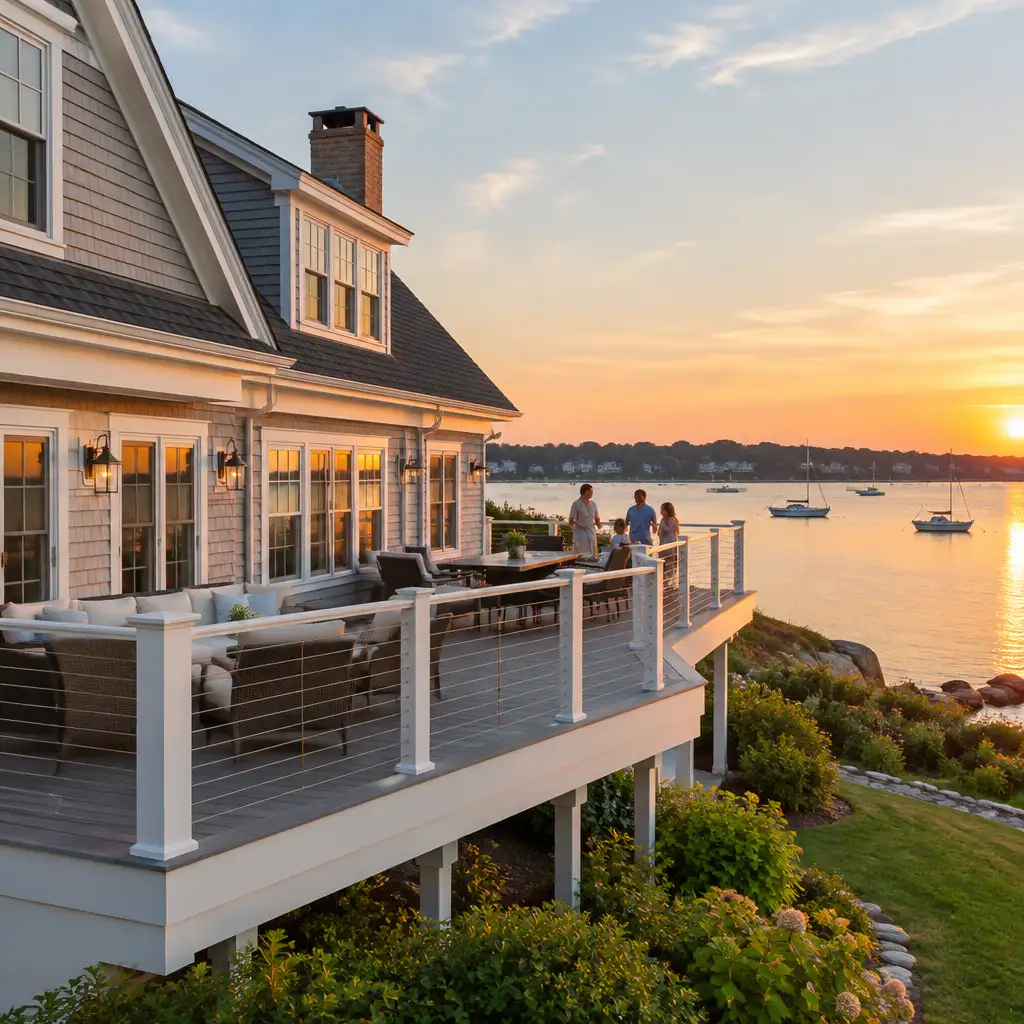
- Outdoor living as a feature: A covered porch or composite deck with weather‑resistant railings extends living space and increases rental appeal—great for Cape Cod summers.
- Systems that tolerate seasonal vacancy: Wi‑Fi thermostats, freeze protection, and remote monitoring help protect systems during shoulder seasons when the home may be unattended.
Thoughtful decisions during design—especially around decks, siding, and roofing—reduce lifecycle costs and position the home for strong rental performance. For outdoor living that sells, consider RJ Built’s custom deck construction services tailored to coastal properties.
Frequently Asked Questions
Q: How long does permitting typically take in Mattapoisett for a waterfront rebuild?
A: Permitting timelines vary, but expect 4–12 weeks for standard building permits if no variances are required; waterfront and conservation approvals can extend that timeline. Early coordination with local officials and an experienced builder shortens surprises.
Q: What exterior materials minimize maintenance for a coastal vacation home?
A: Fiber cement siding, composite decking, PVC trim, stainless fasteners, and high‑quality metal or coastal‑rated roofing all reduce long‑term maintenance compared to untreated wood. Proper flashing and ventilation are equally important to prevent moisture issues.
Q: Can I start with a seasonal home and convert it later to year‑round use?
A: Yes—if you plan systems and septic capacity for future conversion during the design phase. Investing in proper insulation, a right‑sized HVAC system, and an engineered septic now will cost less than retrofitting later.
If you own land and are ready to build, RJ Built’s Build on Your Lot program offers a straightforward path to creating a home tailored to your lifestyle and goals. Contact us at (508) 989-0101 or info@rj-built.com to discuss your property and explore available home designs.