Introduction
Owning a seasonal cottage in Acushnet can be a wonderful way to enjoy coastal Massachusetts — but as needs change, many homeowners ask whether converting to year‑round living makes sense. Whether you plan to retire locally, rent the property through the colder months, or simply want a more comfortable primary residence, the decision to winterize and remodel affects comfort, maintenance, and long‑term value.
This article focuses on the practical steps Acushnet homeowners should take when converting a seasonal property to full‑time occupancy. We cover the building envelope, insulation, HVAC upgrades, plumbing and septic considerations, permitting, and a realistic look at costs versus value. The guidance is tailored to Cape Cod and Southcoast conditions so you can plan with local climate and coastal exposure in mind.
If you’re already thinking about a larger interior or exterior renovation as part of the conversion, consider how home renovations can blend energy upgrades with comfort improvements. RJ Built works with homeowners across Cape Cod and the Southcoast to manage projects from initial planning through completion while addressing coastal construction challenges.
Use this checklist to evaluate your cottage, prepare a budget, and understand the local permitting and construction decisions that matter most in Acushnet.
Assessing your seasonal cottage’s envelope and insulation needs
The building envelope—roof, walls, windows, doors, and foundation—determines how much heat you lose in winter and gain in summer. Many seasonal cottages were built with minimal insulation and single‑glazed windows, so the first step is a thorough envelope assessment.
Checklist for the envelope review:
- Inspect attic and wall insulation R‑values and look for gaps, settling, or moisture damage.
- Check window condition: drafts, single vs. double glazing, and frame integrity.
- Evaluate doors and thresholds for air leaks; consider insulated exterior doors with proper weatherstripping.
- Assess foundation and crawlspace insulation, ventilation, and vapor barriers to prevent freezing and moisture migration.
Common upgrades that deliver the biggest comfort improvements and energy savings include adding attic insulation, insulating and air‑sealing wall cavities where possible, replacing old windows with energy‑efficient units, and installing sealed vapor barriers in crawlspaces. These measures reduce heating load and help HVAC systems operate more efficiently.
Upgrading heating, ventilation, and HVAC for year‑round comfort
Converting a seasonal cottage usually requires upgrading the heating system and adding proper ventilation to control indoor air quality and moisture. In coastal Massachusetts, a reliable, efficient system is necessary for cold winters and changing humidity.
Typical HVAC strategies to consider:
- Right‑sizing a modern heat source: high‑efficiency boilers, ducted heat pumps, or ductless mini‑splits depending on layout and budget.
- Adding controlled ventilation: energy recovery ventilators (ERVs) or heat recovery ventilators (HRVs) to maintain indoor air quality without large heat loss.
- Ensuring zone control: multiple zones or room thermostats help manage occupant comfort and reduce energy use in unused areas.
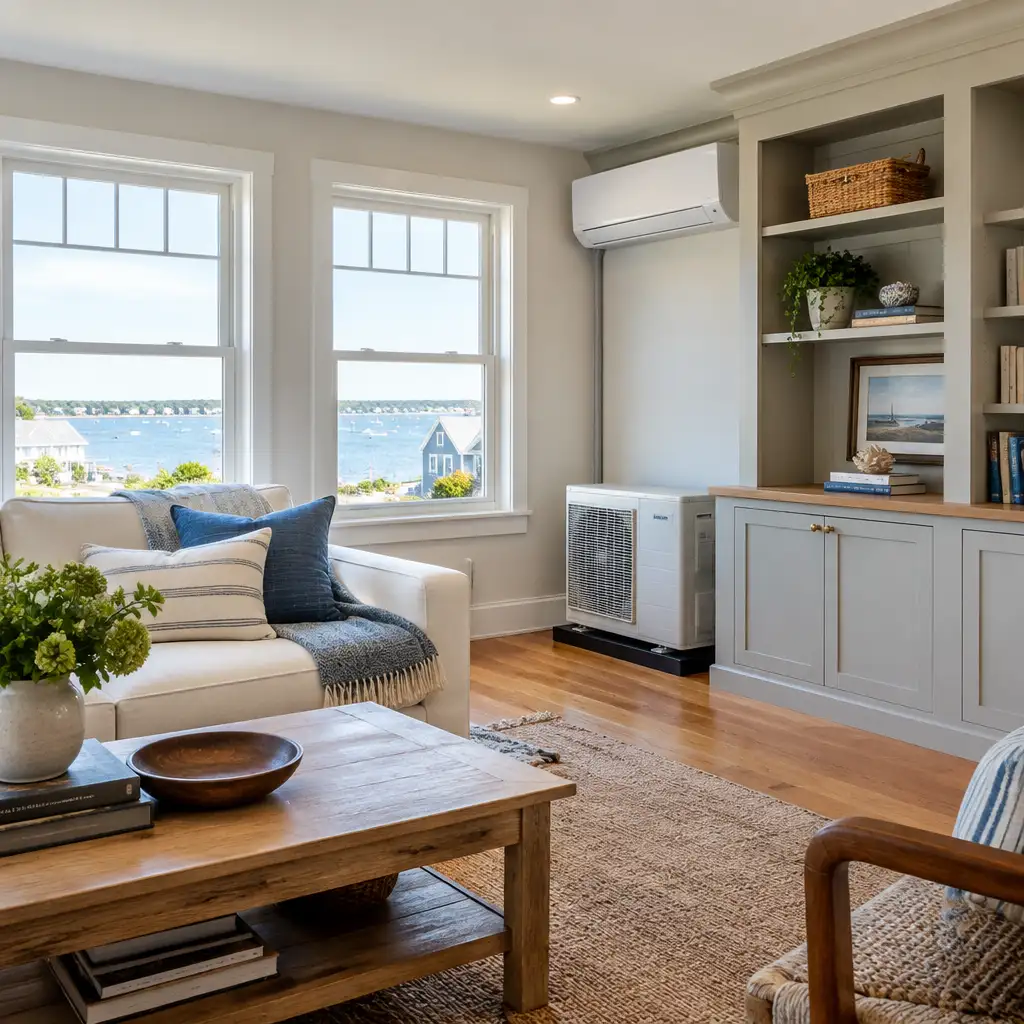
Heat pumps have become an increasingly popular choice for Cape Cod homes because they offer efficient heating and cooling year‑round and can reduce reliance on fossil fuels. However, many cottages still need supplementary heat or thermal improvements before a heat pump alone is appropriate. Work with a qualified installer to evaluate your home’s heating load after insulation upgrades.
Plumbing, septic, and water systems: winterproofing and upgrades
Plumbing and septic systems in seasonal cottages may not be sized or protected for freezing temperatures and year‑round usage. Addressing these systems early prevents costly repairs and service interruptions.
Key plumbing and septic items:
- Insulate exposed pipes in crawlspaces, attics, and basements. Add heat tape where appropriate and verify pipe slope and drainage.
- Evaluate the domestic hot water system: consider an on‑demand tankless or well‑insulated storage water heater sized for full‑time use.
- Inspect the septic system for capacity and freeze protection: increased winter occupancy may require pump upgrades or insulation over the tank and pipes.
- Check well systems (if present) and pressure tanks for freeze risks and add frost‑protected housings as needed.
Acushnet homeowners with municipal sewer or water should confirm connection requirements and winter usage expectations. Upgrading plumbing and septic is often a mid‑ to high‑cost portion of a conversion but essential to reliable year‑round living.
Permits, codes, and Acushnet‑specific requirements for conversions
Before starting work, check with the Acushnet Building Department and the town’s health or sewer department for specific permitting and code requirements. Converting a seasonal dwelling to year‑round occupancy may trigger building code upgrades, septic permits, and inspections.
Permitting steps to plan for:
- Submit plans for insulation, structural changes, and mechanical upgrades; major modifications typically require a building permit and inspections at stages of work.
- Coordinate with the Acushnet health department on septic assessments and any required upgrades for increased occupancy.
- Verify zoning and occupancy limits if you plan to add bedrooms or rental units—some towns require special permits for changes in use.
RJ Built emphasizes hands‑on project management to help homeowners navigate permitting. If you want to understand the company’s experience and project approach, learn about RJ Built and how owner involvement guides local projects.
Moisture control, salt‑air protection, and energy efficiency strategies
Coastal homes face unique maintenance and durability challenges. Salt air accelerates corrosion, and coastal humidity raises the risk of condensation and mold when homes are occupied year‑round. Successful conversions prioritize moisture management and long‑term protection.
Recommended measures:
- Install proper flashing, storm‑proof windows, and quality exterior cladding designed for coastal exposure. These upgrades improve weather resistance and reduce long‑term maintenance.
- Provide continuous air barriers and balanced ventilation to prevent condensation in wall cavities and attics.
- Choose corrosion‑resistant materials and fasteners for exterior work, and consider fiber‑cement or premium wood shingles designed for salt‑air environments.
- Upgrade lighting, appliances, and insulation as part of a broader energy efficiency plan to reduce operating costs after conversion.
Exterior upgrades often pair well with other renovation work. If you plan roof or siding improvements as part of the conversion, exploring roofing services and siding options early helps sequence work and control costs.
Cost estimates, budgeting, and value analysis for year‑round conversion
Budgeting for a seasonal‑to‑year‑round conversion depends on the condition of the existing cottage and the scope of work. Typical cost drivers include insulation upgrades, HVAC replacement, plumbing and septic work, window and door replacement, and exterior weatherproofing.
High‑level cost considerations:
- Minor conversion: air sealing, attic insulation, pipe insulation, and HVAC tune‑ups — often a lower‑to‑mid‑range budget line.
- Moderate conversion: new windows, new heat pump or boiler, partial wall insulation, and some plumbing upgrades — mid‑range.
- Major conversion: full envelope overhaul, new mechanical systems, septic replacement or major upgrade, and interior remodeling — higher budget.
When weighing cost versus value, consider your homeowner goals. If you plan to live in the home long term or convert it to a dependable rental, investing in a higher level of insulation and a modern HVAC system will pay dividends in comfort, lower operating costs, and resale value. For investment properties, strategic improvements—especially to moisture control and heating systems—can protect rental income and reduce vacancy due to winter issues.
Financing options may include home improvement loans, energy‑efficiency rebates for heat pumps and insulation, and local programs for septic upgrades. Work with contractors who provide transparent budgets and phased plans so you can prioritize safety and comfort items first.
When you’re ready to discuss a detailed plan and estimate, schedule a consultation with RJ Built to review costs, timelines, and permitting for Acushnet projects.
Frequently Asked Questions
Q: How long does a typical conversion take?
A: Timelines vary with scope. A minor weatherization and HVAC tune‑up can take a few weeks. Full conversions involving structural, mechanical, and septic work usually take several months, allowing for permitting and inspections.
Q: Will insulation and air sealing let me use a smaller heating system?
A: Often yes. Improving insulation and sealing air leaks reduces heat loss and may allow a smaller, more efficient HVAC system. A load calculation after envelope upgrades gives the right sizing for new equipment.
Q: Do I need to replace my septic system to convert to year‑round use?
A: Not always, but you should have the system evaluated. Year‑round occupancy increases use and may require pump upgrades, additional leach field capacity, or frost protection measures depending on age and condition.
From kitchens and bathrooms to complete interior transformations, RJ Built helps homeowners create beautiful, functional spaces designed for modern living. Contact us at (508) 989-0101 or email info@rj-built.com to begin planning your renovation.