
Introduction
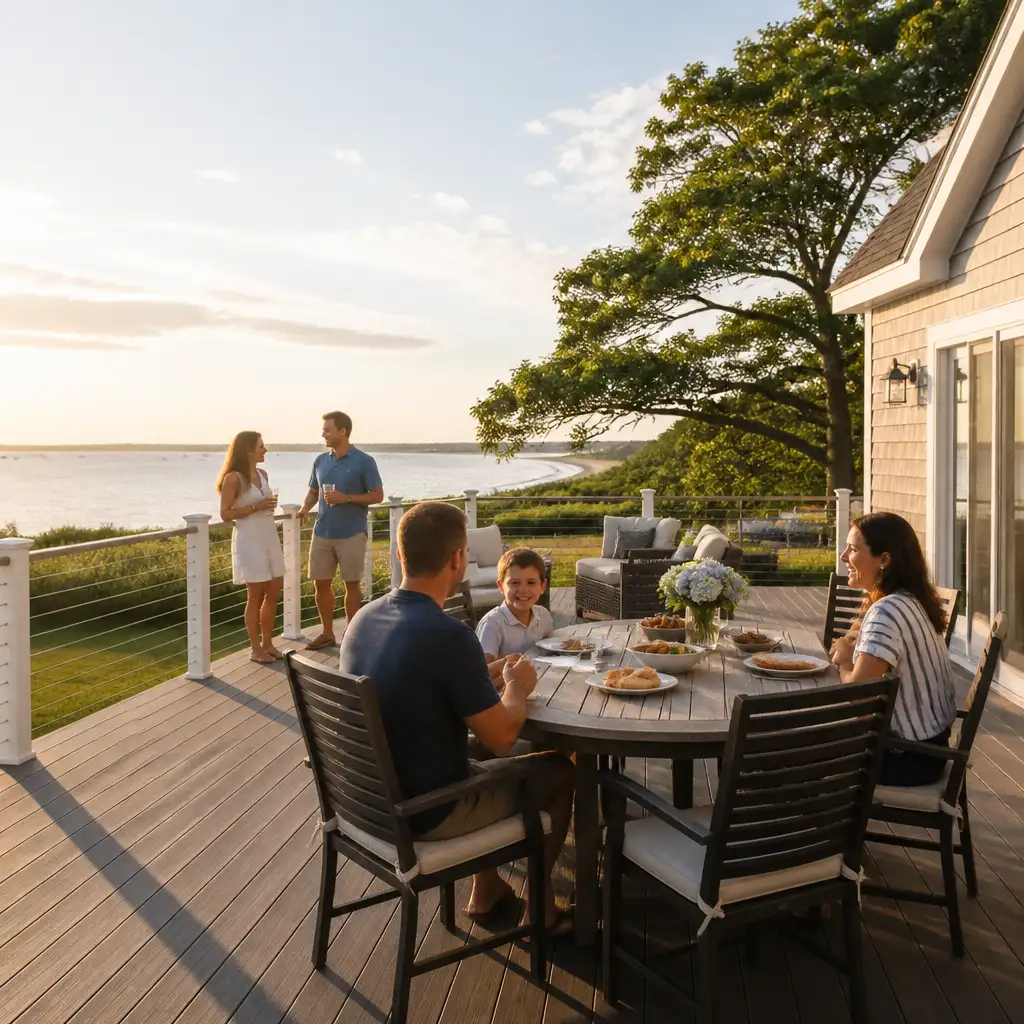
Planning a low‑maintenance deck for your Mashpee vacation home or rental property is a common project for Cape Cod second‑home owners and investors. Salt air, heavy use by guests, and seasonal turnover mean that material choices and design decisions directly affect longevity, upkeep and rental income. For many Mashpee owners the goal is clear: create an outdoor space that looks great, stands up to coastal weather and requires minimal time between guests.
If you live locally or manage properties remotely, working with a trusted Cape Cod home builder who understands coastal construction makes those choices easier. At RJ Built we combine hands‑on owner involvement, licensed craftsmanship and local knowledge to design decks that perform on the shore while enhancing rental appeal. Learn how material selection, layout for entertaining and a realistic maintenance plan come together to protect your investment.
This article focuses on deck construction Cape Cod owners care about: comparing composite, PVC and pressure‑treated timber; planning layouts for entertaining and rentals in Mashpee; and anticipating maintenance needs so you spend more time hosting and less time fixing boards.
Use this guide to weigh trade‑offs, estimate budgets and prepare questions for your contractor when you’re ready to move forward.
Choosing durable deck materials for coastal Mashpee homes
Material choice is the foundation of a low‑maintenance deck. In Mashpee, exposure to salt spray, sun and seasonal moisture cycles accelerates wear on inferior materials. Prioritise options that resist fading, staining and rot so you avoid frequent repairs between rental seasons.
Composite decking is often the best balance for vacation and rental properties: it resists rotting, splintering and insect damage and offers a long life with minimal upkeep. Many composite products include UV stabilisers and textured surfaces for slip resistance.
PVC decking resists moisture even better than some composites and won’t absorb salts or mildew, but it can be more expensive and may warp under extreme heat. Pressure‑treated timber remains the lowest initial cost and has a traditional look, but it requires ongoing sealing, sanding and board replacement over a shorter useful life.
When deciding, consider expected occupancy (high turnover rentals vs occasional family use), desired look, and the time you or a property manager can commit to maintenance.
Composite vs PVC vs pressure‑treated timber: what to pick
Below is a practical comparison focused on Mashpee coastal conditions and rental needs.
- Composite: Durable, fade‑resistant, and available in many colours and finishes. Requires occasional power‑washing and mild soap cleaning. Best for owners who want low upkeep and predictable long‑term costs. Many installers recommend composite for seaside rentals because it limits guest complaints and quickens turnaround between bookings.
- PVC: Excellent moisture resistance and often the easiest to clean. It can be pricier and requires careful fastening systems to allow thermal movement. Choose PVC where water exposure is extreme or where staining must be avoided at all costs.
- Pressure‑treated timber: Lower upfront cost but higher lifecycle work—staining, sealing and board replacement. If you prefer a traditional Cape Cod aesthetic and are prepared for maintenance, treated timber remains a valid choice for private homes.
Also assess substructure materials: galvanized or stainless‑steel fasteners, and rot‑resistant joists (e.g., engineered lumber or treated joists) are smart investments in a salt‑air environment.
Layout and features that maximise entertaining and rental appeal
For vacation and rental properties in Mashpee, smart layout choices boost usability and reservation rates. Focus on flow, flexible zones and durable features that handle heavy use.
Design tips:
- Create distinct zones for dining, lounging and cooking so a family of eight and a couple can occupy the deck comfortably.
- Allow ample circulation space. A minimum of 1.2–1.5 m (4–5 feet) between furniture and railings keeps movement easy for guests carrying plates or coolers.
- Consider integrated features: built‑in benches with storage, durable bar tops, and a dedicated space for a gas grill with non‑combustible surfacing underneath to protect the deck finish.
- Lighting and electrical: plan for task lighting, low‑voltage steps and outlets for outdoor speakers or phone charging—features that increase rental appeal and guest comfort.
- Privacy and wind screening: strategically placed lattice, shrubs, or glass panels can block prevailing winds and create cosy entertaining pockets without blocking views.
These design elements translate directly into better reviews and repeat bookings for rental properties while also increasing the comfort of family gatherings.
Coastal‑focused design: salt air, moisture and wind resistance
Coastal performance begins with detailing. In Mashpee, incorporate materials and construction methods that address salt, moisture and wind.
Key considerations:
- Use corrosion‑resistant fasteners such as stainless steel or hot‑dip galvanized hardware to prevent rust stains and structural weakening.
- Ensure proper drainage beneath the deck to avoid trapped moisture and promote airflow; this reduces rot and mould growth under deck surfaces.
- Choose railing systems tested for local wind loads and use through‑bolting where necessary for higher wind resistance.
- Protect ledger connections to the house with flashing and waterproof membranes to prevent water infiltration and siding damage.
These details matter as much as the board material. A well‑built deck that uses coastal‑appropriate hardware and flashing will outperform a poorly detailed higher‑end surface every time.
Low‑maintenance finishes, cleaning routines and scheduled maintenance
“Low‑maintenance” is not “no maintenance.” It means predictable, light duties instead of emergency repairs. A planned maintenance schedule keeps rental turnovers smooth and avoids costly surprises.
Practical plan:
- Composite and PVC: plan annual deep cleans—gentle power‑wash (low pressure) or brushing with manufacturer‑recommended cleaners in spring and early fall. Address stains promptly after guest departures.
- Pressure‑treated wood: budget for staining/sealing every 2–3 years, and inspect boards annually for splinters, loose fasteners and rot.
- Hardware and railings: inspect fasteners and balusters annually; tighten or replace corroded parts promptly. Lubricate metal hardware where recommended.
- Surface protection: use furniture pads, removable rugs rated for outdoor use, and rubber‑footed planters to prevent concentrated wear and moisture trapping.
Hire a local property manager or seasonal contractor for regular cleanings between bookings. If you’re updating a vacation home as part of broader upgrades, consider combined projects with home renovations to streamline timing and reduce mobilisation costs.
Budgeting, permits and working with a local Cape Cod builder
Start with realistic budgets that include materials, coastal‑grade hardware, design features for entertaining, and a contingency for unforeseen site issues. Mashpee’s coastal lots sometimes require additional considerations—grading, dune setbacks or foundation options—that affect cost and schedule.
Permitting and inspection requirements vary by town. Work with a local, licensed contractor who knows Mashpee rules and can coordinate permits, inspections and any required site work. A reputable local builder will also help you choose a durable design that minimises long‑term maintenance costs while maximising rental appeal.
When you’re ready to discuss options, a short planning meeting can clarify scope, material choices and budget ranges. RJ Built provides hands‑on owner involvement, experienced wooden and composite deck construction crews, and full project coordination so your deck is ready for the season. For project inquiries you can RJ Built is a reliable local choice for deck construction Cape Cod owners trust.
If you want to move from planning to pricing, custom deck construction specialists can review your site and propose layouts that suit your rental strategy and entertaining goals.
Frequently Asked Questions
Q: What decking material lasts longest in Mashpee’s salt‑air environment?
A: High‑quality composite boards with coastal‑rated fasteners typically offer the best balance of long life and low maintenance in Mashpee. PVC also performs well for moisture resistance but can cost more upfront.
Q: Do I need a permit to build or replace a deck in Mashpee?
A: Most new decks or significant repairs require a building permit and inspections. Setbacks or waterfront proximity may add requirements. A local builder familiar with Mashpee permitting can handle submissions and reduce delays.
Q: How often should rental decks be deep‑cleaned or inspected?
A: Inspect decks annually and deep‑clean composite or PVC decks at least once a year—ideally in spring before the rental season. High‑use rental decks may need light cleanings between bookings to remove sand, salt and stains.
Thinking about adding a custom deck to your Cape Cod or Southcoast home? RJ Built designs and builds outdoor living spaces using premium materials that are built to last. Call (508) 989-0101 or email info@rj-built.com to schedule a consultation.