Introduction
Planning a deck upgrade for a vacation or rental property in Wareham brings a set of practical decisions: how to balance durability against upfront cost, how to create an inviting entertaining layout, and how to minimize maintenance when the house is rented or used seasonally. For many owners on the Southcoast, a low‑maintenance composite deck is an attractive solution—but not every composite product or design performs the same on coastal properties.
This article helps Wareham homeowners, second‑home owners, retirees, and property investors decide on materials, structural details, and layout choices that keep a deck looking great year after year while making entertaining easy and safe. We focus on coastal durability—salt‑air corrosion, moisture management, and wind exposure—and on features that improve rental turnover and guest experience.
RJ Built has extensive experience with deck construction across Cape Cod and the Southcoast, so the guidance below reflects practical tradeoffs we see on projects: composite vs. PVC vs. pressure‑treated wood, coastal fasteners, railing systems, drainage strategies, and permitting requirements specific to Wareham. Use this as a decision‑support guide when planning your next home improvement or home remodeling Cape Cod project.
If you own a vacation or rental property and want design help tailored to Wareham conditions, this guide will give you the questions to ask contractors and the design priorities that reduce long‑term costs and downtime.
Choosing the Right Decking Material: Composite vs. PVC vs. Pressure‑Treated
Three common choices dominate deck projects for vacation and rental homes: composite, capped‑PVC, and pressure‑treated wood. Each has pros and cons that matter more on the coast.
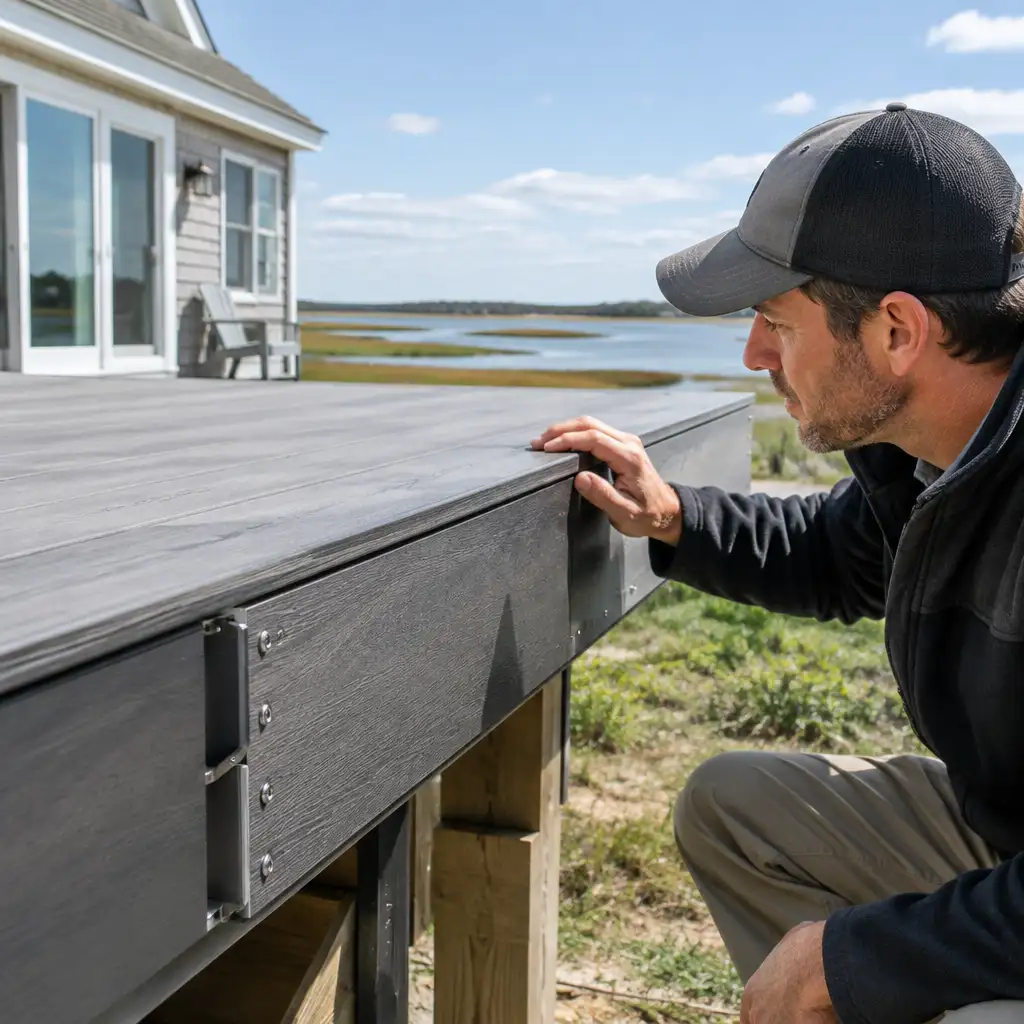
Composite decking blends wood fiber with plastic and is available with a protective cap or without. Capped composite boards resist staining and scratching and offer realistic textures and colors. They require less annual upkeep than wood and typically come with long manufacturer warranties. For rental properties where tenants or cleaners may use the deck heavily, capped composite reduces maintenance cycles and improves guest satisfaction.
PVC decking is fully synthetic (no wood content) and is extremely resistant to moisture, rot, and fading. PVC tends to be very low maintenance, but it can be more expensive and may feel warmer underfoot in sun. PVC can also be more flexible than composites, which affects span and joist spacing—details your builder should confirm during design.
Pressure‑treated wood remains the most budget‑friendly option up front and has a traditional look. Drawbacks for coastal Wareham properties include ongoing sealing or staining, higher lifecycle maintenance, and vulnerability to fastener corrosion from salt air. For investors focused on long‑term cost control and reduced turnover between rentals, composite or PVC often deliver better lifecycle value despite higher initial costs.
When comparing products, consider warranty terms for coastal exposure, slip resistance, color options, and color‑fade guarantees. For examples of how these options are applied on Cape Cod properties, explore our custom deck construction portfolio and talk with a local Cape Cod home builder experienced in waterfront and coastal projects: composite deck construction.
Designing a Layout for Entertaining and Rentals
A deck for a vacation or rental property should support flexible entertaining while minimizing clutter and wear. Start with these planning principles:
- Define primary zones: dining, grilling, and lounging. Allow clear walkways and access to kitchen doors and stairs.
- Choose durable surface patterns and colors that hide wear while still feeling welcoming to guests.
- Plan for furniture clearance and storage: built‑in benches with storage or dedicated areas for stackable furniture reduce time spent staging between renters.
- Consider multi‑level decks where site grade allows—separate levels make it easy to host different groups (kids vs. adults) without crowding a single space.
Layout should also consider accessibility for older guests or renters with mobility needs. Gentle slopes, wide gates, and consistent step heights make a deck more usable and increase the rental market appeal for retirees and multi‑generational groups.
Railings, Lighting, and Accessories for Low Maintenance
Low‑maintenance railings and accessories both improve safety and reduce upkeep:
- Railings: Aluminum and composite rail systems resist corrosion and paint flaking better than steel or wood. Glass infill panels offer an upscale look and minimal maintenance, but they require regular cleaning to remove salt spray.
- Lighting: Integrated low‑voltage or LED fixtures designed for exterior use reduce bulb changes and are more energy efficient. Recessed stair lights and rail post caps improve safety and guest experience without adding complex wiring for renters to manage.
- Accessories: Choose stainless or marine‑grade hardware for grills and mounted planters. Consider removable shade solutions—retractable awnings or umbrellas—so replacements or cleaning are simple between stays.
Durable finishes for furniture and durable deck rugs designed for outdoor use help keep turnover cleaning simple.
Drainage, Ventilation, and Substructure Best Practices
A great deck surface can fail quickly if the substructure traps moisture. On Wareham properties, where humidity and salt spray are common, pay attention to drainage and ventilation:
- Provide adequate gaps between deck boards as recommended by the manufacturer to allow water run‑off and airflow. Capped composites need specific gap widths; follow the product guidance to avoid cupping or trapping moisture.
- Design joist spacing and spans suitable for your selected decking material; PVC and some composites have different span requirements than wood.
- Ensure footings and grade drainage direct water away from the house and do not allow pooling under the deck. Consider gravel bedding and drainage channels where site slope is minimal.
- Use ventilated framing techniques and open rim joists to discourage mold and wood decay in hidden areas. A ventilated under‑deck or drip‑edge system can protect the house and provide usable dry storage under elevated decks.
For complex sites—sloped lots, waterfront setbacks, or where new foundation work is required—coordinate drainage with the overall landscaping plan and building envelope. If you want help planning these details, contact RJ Built to schedule a consultation and review substructure strategies tailored to Wareham conditions.
Coastal Fasteners, Corrosion Resistance, and Material Durability
Salt air accelerates corrosion, so fastener and connection choices are critical. On coastal projects, use:
- Stainless steel or hot‑dip galvanized fasteners rated for marine environments. Stainless is preferred for look and long‑term performance, especially with composites that show corrosion stains easily.
- Hidden fastening systems where appropriate. These create a clean surface and reduce water traps, but ensure the hidden system is compatible with the decking and manufacturer warranty.
- Corrosion‑resistant hardware for railings, brackets, and connectors. Choose products tested for coastal exposure.
When designing for rental durability, prioritize materials that tolerate heavy foot traffic and frequent cleanings. Regular inspection schedules for fasteners, railing connections, and deck board edges identify minor problems before they require expensive repairs.
RJ Built’s coastal construction experience means we specify materials and fasteners appropriate for Southcoast exposures while keeping installation accessible for future maintenance—important whether you are a seasonal owner or full‑time host.
Permitting, Local Codes, and Insurance Considerations in Wareham
Wareham has local permitting requirements and coastal zone regulations that affect deck size, setbacks, and structural design. Before planning, verify:
- Setbacks from wetlands or coastal resource areas and whether your lot is within special flood hazard zones.
- Town building department rules for rail heights, guard openings, stair design, and stair lighting.
- Whether additional state or federal permits are needed for waterfront properties or work within protected buffers.
Insurance companies also evaluate decks differently: elevated decks or decks over water can affect coverage and claims handling. Working with a licensed builder familiar with Wareham codes and insurance considerations reduces surprises. If you need help starting the permitting process, RJ Built is a licensed, local Cape Cod home builder that can coordinate permitting and design—learn more about our residential construction background at RJ Built.
Frequently Asked Questions
Q: How long does composite decking typically last in a coastal climate?
A: High‑quality capped composite decking can last 20–30 years or more with proper installation and ventilation. Longevity depends on product quality, fastener choice, and how well the substructure protects against trapped moisture and corrosion.
Q: Can I install a deck quickly between rental seasons?
A: Minor repairs or surface upgrades can be done between seasons, but a full deck replacement or multi‑level build requires planning for permitting, inspections, and weather. Schedule larger projects in spring to maximize the summer rental season. A local contractor familiar with Wareham permitting helps speed approvals.
Q: Are composite decks more expensive over time than pressure‑treated wood?
A: Composite decks often have higher upfront costs but lower maintenance expenses over their lifespan. When you factor in staining, sealing, replacement cycles, and tenant turnover, composites frequently provide better lifecycle value—especially for rental properties where reduced maintenance means fewer service calls and faster turnovers.
Thinking about adding a custom deck to your Cape Cod or Southcoast home? RJ Built designs and builds outdoor living spaces using premium materials that are built to last. Call (508) 989-0101 or email info@rj-built.com to schedule a consultation.