Introduction
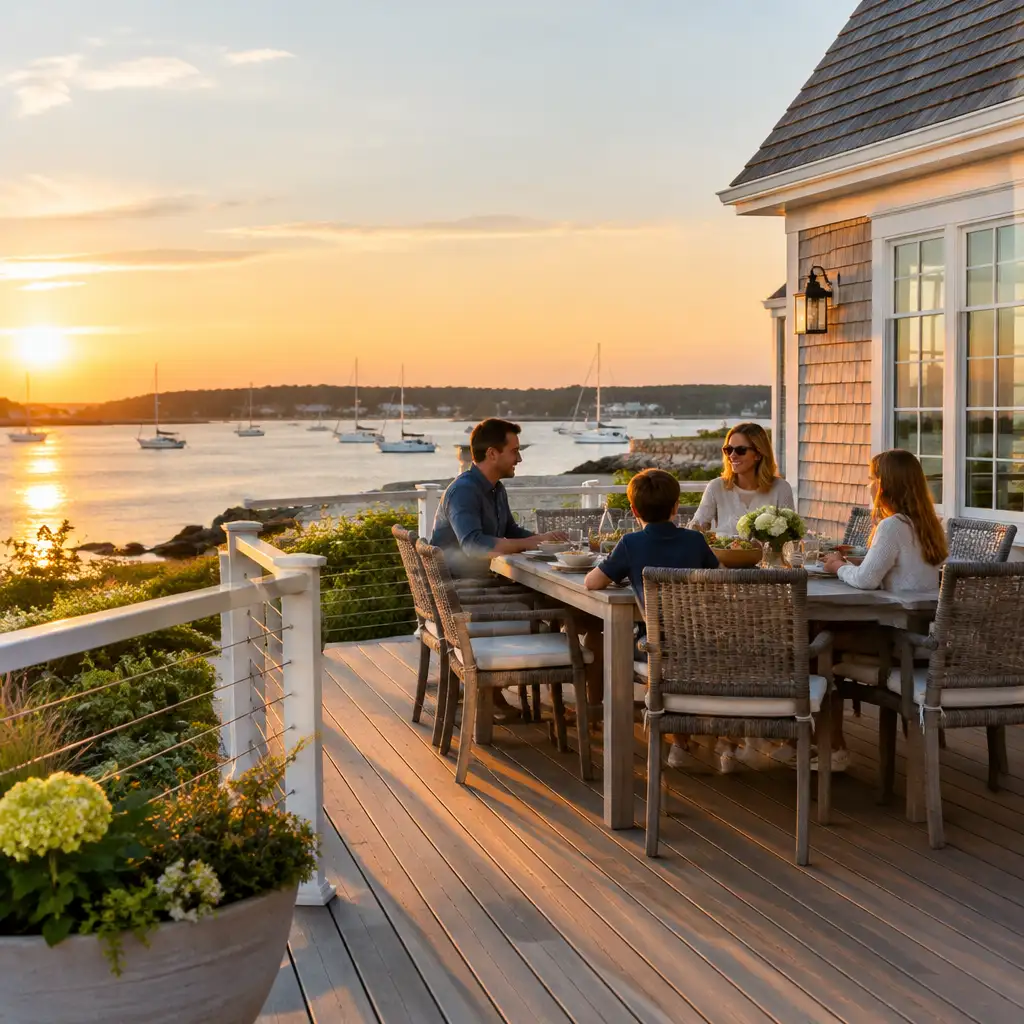
Planning a deck for your Swansea waterfront vacation home is more than a cosmetic upgrade — it’s a decision that affects rental appeal, long-term maintenance, and how you’ll entertain family and guests for years to come. Second-home owners on the Massachusetts Southcoast have unique priorities: low-maintenance finishes, resilient materials that withstand salt air, and thoughtful layouts that make hosting simple and comfortable.
For many homeowners who rent their Swansea property or use it seasonally, choosing the right materials and design details can reduce turnover work between stays and limit expensive repairs after storms. A well-built deck supports rental income, improves property value, and gives guests a memorable outdoor living space that feels safe and welcoming.
This guide focuses on practical decision-making for deck construction in Cape Cod climates. It explains material choices, layout ideas for entertaining, railing and lighting options suitable for waterfront properties, and maintenance planning so your deck remains durable and attractive through wind, salt, and wet seasons.
If you’re exploring options or want professional help, RJ Built offers experience designing custom deck projects throughout the region — see our custom custom deck construction services for examples and design guidance.
Choosing low-maintenance decking materials for Swansea waterfront homes
On the Southcoast, salt air and occasional storm surge make material selection one of the most important early decisions. Composite decking and PVC boards are popular because they resist rot, don’t require annual sealing, and hold up well in coastal settings. High-quality composite boards use capped surfaces to limit staining and fading, making them ideal for rental properties where cleaning and upkeep may be intermittent.
When comparing materials, consider these homeowner-focused factors:
- Longevity: Composite and PVC typically last longer than pressure-treated wood in salty environments because they don’t absorb moisture the same way.
- Maintenance: Composites require occasional washing but no sanding or staining—this is a major advantage for second-home owners and investors.
- Appearance: Modern composites mimic natural wood grain and come in color palettes that suit Cape Cod shingle-style homes.
- Cost over time: Higher upfront costs for composite decking are often offset by lower maintenance and replacement expenses.
RJ Built’s experience as a local Cape Cod home builder makes it easy to compare realistic life-cycle expectations for different decking systems. If you’re planning broader exterior updates while building your deck, a coordinated approach with home renovations can improve visual continuity and weather resistance across your property.
Planning a deck layout optimised for entertaining and rentals
Designing a deck for entertaining means thinking about guest flow, zones, and ease of use. For vacation rental properties in Swansea, layouts that clearly define cooking, dining, and lounge areas make the space more usable and attractive in listings.
Consider these layout strategies:
- Zoned design: Create distinct areas for grilling, dining, and lounging. A slightly raised platform or inset planters can define a conversation area without walls.
- Circulation: Keep paths between doors, stairs, and amenities clear so groups can move without crowding. Wide stairs that double as seating are a smart use of space.
- Access and storage: Provide easy access to utilities and discreet storage for cushions and rental supplies. Built-in benches with storage help keep the deck tidy between guest stays.
- Durability for furnishings: Choose outdoor-rated furniture and fabrics that can resist sun and salt. Secure large items to minimize storm damage and shifting during off-season months.
A thoughtful entertaining layout also considers guest safety and local regulations—especially important on waterfront properties where rails, stair tread depth, and lighting affect both comfort and liability.
Railing, lighting, and safety options that suit coastal properties
Railing choices have a big impact on both aesthetics and performance. For waterfront decks, stainless-steel cable rail systems and aluminium-framed glass panels are popular because they resist corrosion and preserve water views. Powder-coated aluminium rails are another low-maintenance option suited to Cape Cod climates.
Lighting should be planned for both ambience and safety. Low-voltage LED options built into stairs, posts, and under-rail channels improve nighttime usability without complicated maintenance. Solar options can supplement hardwired lighting for lower usage areas but evaluate performance in coastal foggy conditions.
Safety considerations specific to waterfront settings include non-slip deck surfaces or textured composites, lockable gates for stair landings that lead to the shoreline, and removable windscreens or hurricane ties for temporary storm closures. These details matter for rental properties where guest turnover increases the chance of different people using the space.
Structural design and storm resilience for waterfront decks
Designing a deck that survives coastal storms begins with proper foundations and structural connections. Elevated decks over water or marsh require pressure-treated or stainless-steel fasteners, and footings designed to resist scour and shifting. In many Swansea waterfront locations, uplift forces from wind and wave action are important design considerations.
Consider these structural best practices:
- Corrosion-resistant fasteners: Use stainless-steel or hot-dipped galvanized hardware to prevent accelerated deterioration from salt exposure.
- Proper flashing and drainage: Prevent trapped moisture where the deck meets the house by installing durable flashing and ensuring deck boards promote drainage.
- Engineered framing: When spans are large for entertaining spaces, engineered joists and beams reduce long-term deflection and squeaking.
- Design for repairability: Plan sections that can be replaced or elevated after extreme events without demolishing the entire structure.
Local knowledge matters: working with a Southcoast home builder who understands Swansea tide lines, local wind loads, and permitting will help you avoid common pitfalls and keep the project on schedule when storm season approaches.
Maintenance planning: salt-air, moisture, and long-term durability
Even low-maintenance decks need a maintenance plan tailored to coastal conditions. For second homes and rentals, a seasonal checklist reduces the chance of corrosion, staining, or hidden structural issues being missed between stays.
Simple maintenance tasks to schedule:
- Power wash composite boards once per year to remove salt and organic material.
- Inspect fasteners, rails, and posts annually for signs of corrosion or loosening.
- Clean and re-seal any wooden rails, trim, or fascia that complement composite decking.
- Store or secure lightweight furniture and grills before predicted storms and install removable hurricane straps where appropriate.
For investors or owners who rent their Swansea home, consider contracting a local property manager or handyman to perform off-season inspections and routine care. RJ Built’s full-service approach to exterior projects means we can coordinate deck construction alongside exterior weatherproofing work — from residential construction services to siding and roofing upgrades — to reduce future maintenance conflicts.
Budgeting, permits, and working with a local Cape Cod builder
Budgeting for a waterfront deck requires factoring in both materials and coastal-specific construction costs like elevated footings, corrosion-resistant hardware, and permitting. Local building departments in Swansea and the surrounding Southcoast have regulations for setbacks, coastal construction zones, and stormwater management that affect design and cost.
Steps to keep your project on track:
- Early site evaluation: Confirm setbacks, elevation requirements, and any conservation constraints before finalising a plan.
- Get multiple quotes: Compare like-for-like materials and installation practices to understand the true cost of long-term durability.
- Permit coordination: A local contractor experienced with Swansea permitting will speed approvals and prevent costly redesigns.
- Work with a full-service team: If your deck ties into other upgrades — like replacing siding or adjusting roof drainage — coordinating those projects reduces duplicate work and potential water intrusion issues down the road.
RJ Built combines hands-on ownership and local coastal construction expertise to help homeowners navigate these steps. Whether you’re upgrading a seasonal cottage or creating a higher-end rental amenity, working with an experienced custom home builder Cape Cod and renovation partner can protect your investment and simplify ongoing maintenance.
Frequently Asked Questions
Q: What decking material lasts longest in salt-air environments?
A: High-quality capped composite and PVC decking typically outlast pressure-treated wood in coastal settings because they resist moisture absorption and rot. Selecting boards with UV-resistant caps and proper installation practices improves life span.
Q: Do I need special permits to build a deck on a Swansea waterfront lot?
A: Yes. Waterfront properties often have setback, elevation, and conservation requirements. Early site evaluation and permit coordination with the local building department are essential to avoid delays and rework.
Q: How can I make my rental deck low-maintenance between guest stays?
A: Choose composite or PVC decking, use corrosion-resistant fasteners, include storage for cushions, schedule annual cleaning, and secure or store large furniture before off-season. A local maintenance contact or property manager can handle seasonal checks.
Ready to take the next step? For project planning, budgeting, or permit help for your Swansea property, talk to a builder who understands coastal design and long-term durability needs.
Thinking about adding a custom deck to your Cape Cod or Southcoast home? RJ Built designs and builds outdoor living spaces using premium materials that are built to last. Call (508) 989-0101 or email info@rj-built.com to schedule a consultation.