
Introduction
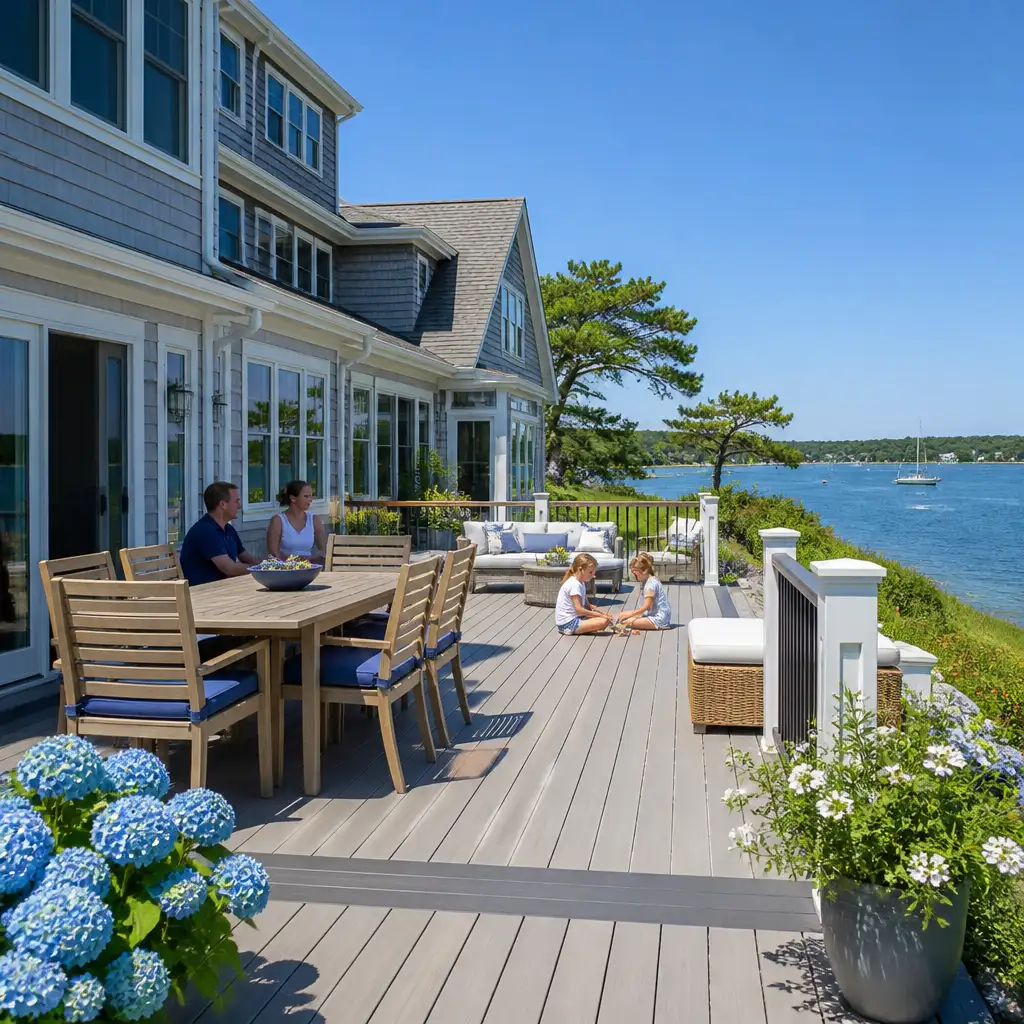
When a multi‑generational family or a frequent rental owner in Orleans plans a new deck or a deck replacement, material choice can make or break long‑term enjoyment and budgets. Orleans properties face heavy seasonal use, salt‑air exposure, and guests who expect a low‑maintenance, attractive outdoor space. Deciding between composite, PVC, and pressure‑treated wood is a common crossroads for homeowners and investors on Cape Cod.
This article lays out realistic pros and cons for each material, fastening and finish recommendations that resist salt air, a seasonal maintenance calendar for heavy use, and design ideas tailored to waterfront entertaining. The goal is to help Orleans homeowners and property investors make a clear decision that balances upfront cost, upkeep, longevity, and rental appeal.
RJ Built has extensive experience with custom deck construction in coastal Massachusetts, so you’ll find practical tradeoffs here rather than vendor hype. If you’re considering a major build or a renovation combined with interior work, our remodeling services can help coordinate timelines and materials so the whole property feels cohesive.
Read on to compare composite vs. PVC vs. pressure‑treated decks, learn coastal fastening best practices, and get a seasonal maintenance plan that keeps a high‑use family compound safe and attractive year after year.
Composite vs PVC vs Pressure‑Treated: Material Pros and Cons for Orleans Decks
Choosing a deck material starts with understanding how each performs under heavy family use and coastal exposure. Here are the practical takeaways:
- Composite decking (wood fiber + plastic): Looks and feels close to wood, resists rot and insect damage, and requires less routine sealing. Composite performs well in high‑traffic areas, offers many color and texture options, and typically carries a 25‑year surface warranty from reputable manufacturers. Downside: can be more expensive up front and may show heat retention in direct sun.
- PVC decking (100% synthetic): Best for low maintenance and maximum moisture resistance. PVC does not absorb water, resists staining and mold, and often has the longest manufacturer warranties. It’s a strong choice for owners who want minimal upkeep for rental turnovers or weekend‑only second homes. Drawbacks include higher material cost and sometimes a less natural look compared with composite.
- Pressure‑treated wood: Lowest initial material cost and familiar aesthetic. Properly constructed and finished, a treated‑wood deck can last many years, and boards are easy to replace after wear or damage. However, wood needs regular sealing, sanding, or staining—especially on Cape Cod where salt accelerates weathering. For heavy use compounds, ongoing maintenance costs and the aesthetic of aging wood should factor into the decision.
For Orleans homeowners balancing longevity and family use, composite or PVC tend to be the most cost‑effective long term despite higher upfront costs. If you value a traditional look and are willing to commit to maintenance, pressure‑treated can work—particularly for non‑waterfront yards where salt exposure is reduced.
How Coastal Conditions and Salt Air Influence Material Choice
Orleans’s proximity to the Atlantic means salt‑laden air, wind‑driven rain, and higher UV exposure. These conditions accelerate corrosion, fading, and mold growth on organic materials.
- Salt accelerates metal corrosion—choose stainless steel hardware and corrosion‑resistant connectors.
- Moisture and wind‑blown sand increase abrasion; dense, non‑porous materials (PVC, capped composites) resist surface breakdown better than bare wood.
- UV exposure causes fading and surface breakdown over time—UV‑resistant finishes and manufacturer warranties that address color retention are worth evaluating.
When specifying a deck in Orleans, consider both the microclimate (exposed waterfront vs. sheltered lot) and how the family uses the space—frequent grilling, pool adjacency, and heavy foot traffic all change how a material will age.
Fasteners, Connectors, and Finishes for Salt‑Air Longevity
Material choice only covers the boards—fasteners, joist hangers, ledger attachments, and finishes determine long‑term performance. For Orleans and other Cape Cod locations, follow these recommendations:
- Screws and fasteners: Use 316 stainless‑steel or manufacturer‑approved stainless fasteners for PVC and composite decks. 316 resists pitting from salt better than 304. For pressure‑treated wood where cost is a concern, hot‑dipped galvanized fasteners of the highest ASTM grade are a minimum.
- Connectors and joist hangers: Choose structural hardware rated for coastal use—hot‑dip galvanized or stainless options. Look for marine or coastal finish ratings on hardware.
- Hidden‑fastener systems: Many composite and PVC boards accept hidden clips, which reduce surface corrosion and create a cleaner look. Ensure the clip material is stainless or coated for salt resistance.
- Ledger flashing and sealants: Use durable flashing and marine‑grade sealants where the deck attaches to the home to prevent water intrusion and rot. Proper flashing installation is critical to protect the house envelope in wind‑driven rain.
- Finishes: For pressure‑treated wood, apply an oil‑based or penetrating stain with UV protection within 6–12 weeks of installation and reapply per the maintenance schedule. For composites and PVC, clean periodically and follow manufacturer guidance; avoid solvent‑based cleaners that can harm painted surfaces.
Maintenance Calendars for High‑Use Family Compounds
A realistic maintenance plan minimizes surprises and protects your investment. Below is a practical calendar tailored to heavy family use and Orleans’s coastal climate.
- Spring (March–May): Inspect railings, stairs, and fasteners after winter. Clean deck surface with manufacturer‑approved cleaner; pressure wash composites on low pressure if allowed. Apply wood stain or sealer to pressure‑treated decks if peeling or weathered.
- Early Summer (June): Check for loose boards or protruding fasteners before peak guest season. Re‑tighten hardware and replace any damaged boards. Clean grills and nearby surfaces to prevent grease stains.
- Mid/Late Summer (July–August): Routine sweeping and spot cleaning after heavy use. For rental properties, keep a short cleaning checklist between turnovers. Verify hidden fasteners are secure and inspect deck lighting and electrical fixtures for corrosion.
- Fall (September–November): Deep clean the deck surface, clear drains and gaps, and inspect for mold or mildew. For pressure‑treated decks, schedule an annual re‑seal or stain if recommended. Remove furniture cushions for storage or use covers to reduce moisture trapping.
- Winter (December–February): Remove snow promptly using plastic shovels to avoid surface damage. Avoid rock salt directly on decking; use sand or a deck‑safe ice melt formulated for the material. Inspect after storms for wind damage and loose components.
Keep a maintenance log with dates of stain application, hardware replacements, and professional inspections to help with resale or rental documentation.
Design Tips for Waterfront Entertaining and Multi‑Generational Use
High‑use family compounds need flexible, durable design that accommodates kids, seniors, and guests. Consider these practical design choices:
- Zoning and flow: Create separate zones—an active grill and prep area, a dining zone, and a quieter seating area. Use built‑in seating or planters as gentle barriers to help circulation and child safety.
- Accessibility: Wider stairs, gentle risers, and a ground‑level entry reduce tripping hazards and support aging‑in‑place needs. Consider non‑slip surface textures for seniors and wet conditions.
- Lighting and power: Install integrated, low‑voltage lighting and durable outdoor outlets for guests and seasonal lighting. All fixtures should be rated for coastal environments.
- Shade and shelter: Pergolas, retractable awnings, or a covered portion of the deck extend use during sun or light rain and protect decking from excess UV and moisture.
- Material choices: For waterfront entertaining, select slip‑resistant finishes and materials that resist staining from food, sunscreen, and pool chemicals. Capped composite or PVC often meets these needs with fewer maintenance headaches.
ROI and Rental Considerations for Orleans Vacation Properties
Investors and second‑home owners should weigh upfront costs against maintenance, guest satisfaction, and resale value. Key points:
- Upfront vs. lifecycle cost: PVC and premium composites cost more initially but reduce annual maintenance expenses and turnover downtime—important for rental schedules. Pressure‑treated has lower initial cost but higher recurring costs for sealing and repairs.
- Guest appeal: Clean, modern composite or PVC decks photograph well for listings and can improve nightly rates. Durable finishes also reduce negative guest reviews related to deck wear.
- Insurance and safety: Well‑built decks with proper fasteners and flashing reduce liability and long‑term repair costs after storms. Documenting professional construction and maintenance helps insurance and resale discussions.
- Payback example: A higher‑end composite deck that reduces annual maintenance by $1,000–$1,500 can pay back the price differential over a 7–12 year period through lower upkeep and higher rental appeal, depending on occupancy and local rates.
RJ Built helps property owners model expected lifecycle costs and choose materials that align with rental strategies, whether you prioritize maximum nightly income, minimal owner time on upkeep, or the lowest initial spend.
Frequently Asked Questions
Q: Which deck material lasts longest in salt‑air conditions?
A: PVC and capped composites generally provide the longest low‑maintenance service life in coastal environments. Properly detailed and maintained pressure‑treated wood can also perform well, but it requires more frequent maintenance to counter salt and moisture effects.
Q: Do I need stainless‑steel fasteners for composite decking?
A: Yes—316 stainless steel is recommended for coastal locations like Orleans to avoid pitting and corrosion from salt exposure. Follow manufacturer recommendations; using the wrong fasteners can void warranties.
Q: How often should I schedule professional inspections for a high‑use deck?
A: For heavy family use and coastal exposure, an annual professional inspection is a good baseline. Inspections after major storms or high‑wind events are also prudent to catch loose connections or flashing issues early.
If you’re planning a new deck or a major renovation in Orleans, RJ Built can help you evaluate materials, fastening systems, and a maintenance plan tailored to your family’s use and the property’s coastal exposure. For project examples and guidance on integrating outdoor work with interior updates, see our custom deck construction projects and our remodeling services.
As a locally owned Cape Cod home builder with hands‑on owner involvement, RJ Built focuses on durable details that protect value and reduce long‑term costs for homeowners and investors in Orleans.
Ready to plan your deck? Schedule a consultation to discuss materials, budgets, and timelines that match your family’s needs.
Thinking about adding a custom deck to your Cape Cod or Southcoast home? RJ Built designs and builds outdoor living spaces using premium materials that are built to last. Call (508) 989-0101 or email info@rj-built.com to schedule a consultation.